ServicesWell Water Treatment
Well Water Treatment in Seabrook
If your home runs on a private well, nobody else is testing that water for you. We find out what is in it, then fit the right mix of filtration and disinfection so your water looks, smells and tastes the way it should.
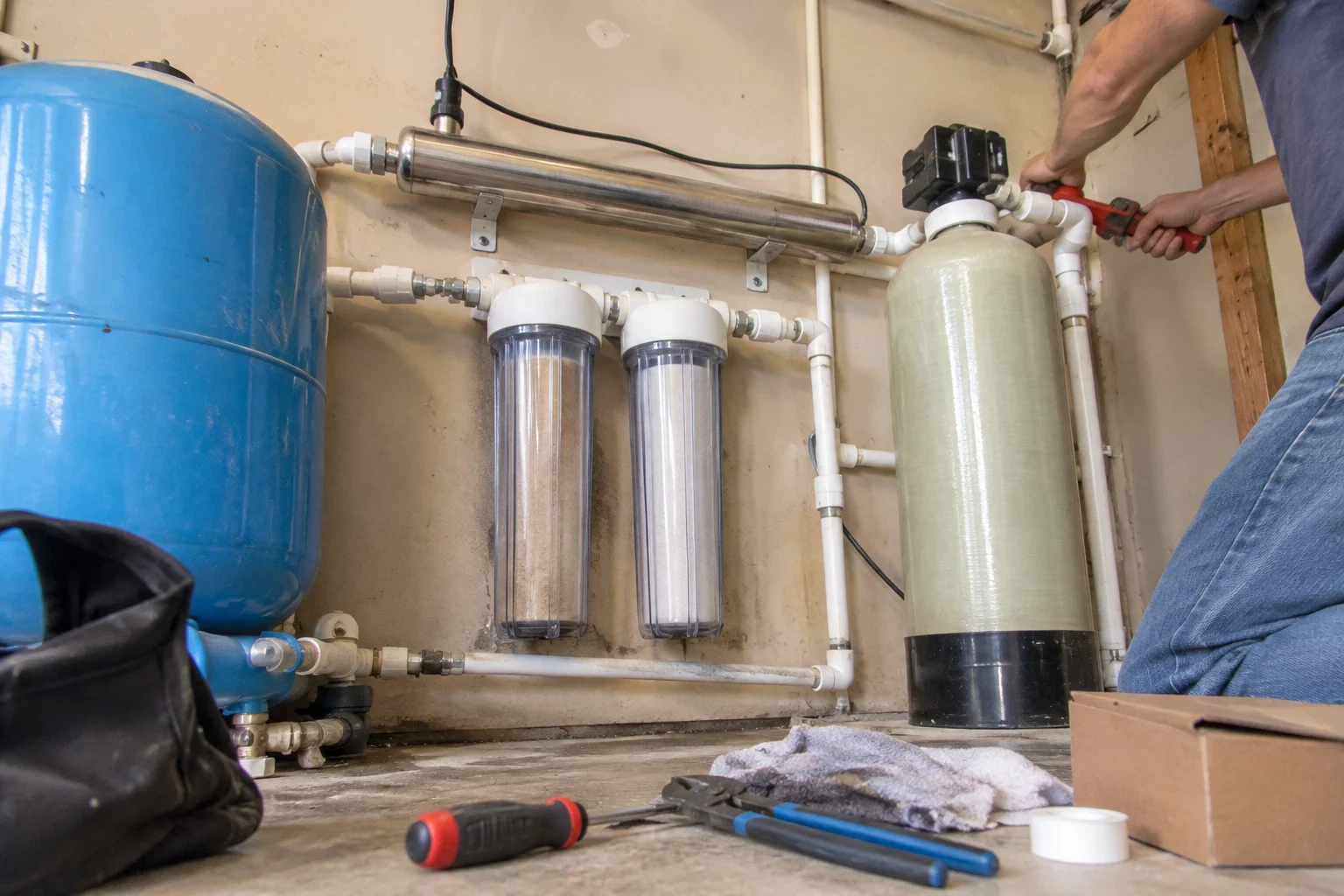
Treatment That Starts With Your Water, Not a Catalog
City water arrives already treated. Well water arrives however the ground left it, and that can change from one well to the next on the same road. Iron that stains sinks orange, manganese that leaves black specks, hydrogen sulfide that smells like rotten eggs, fine sand and bacteria are the usual suspects.
Each of those needs a different fix, so we test before we recommend anything. If your well only has a sediment problem, you get a sediment filter, not a full treatment train you never needed. We would want the same honesty if it were our own well.
What Well Water Treatment Can Include
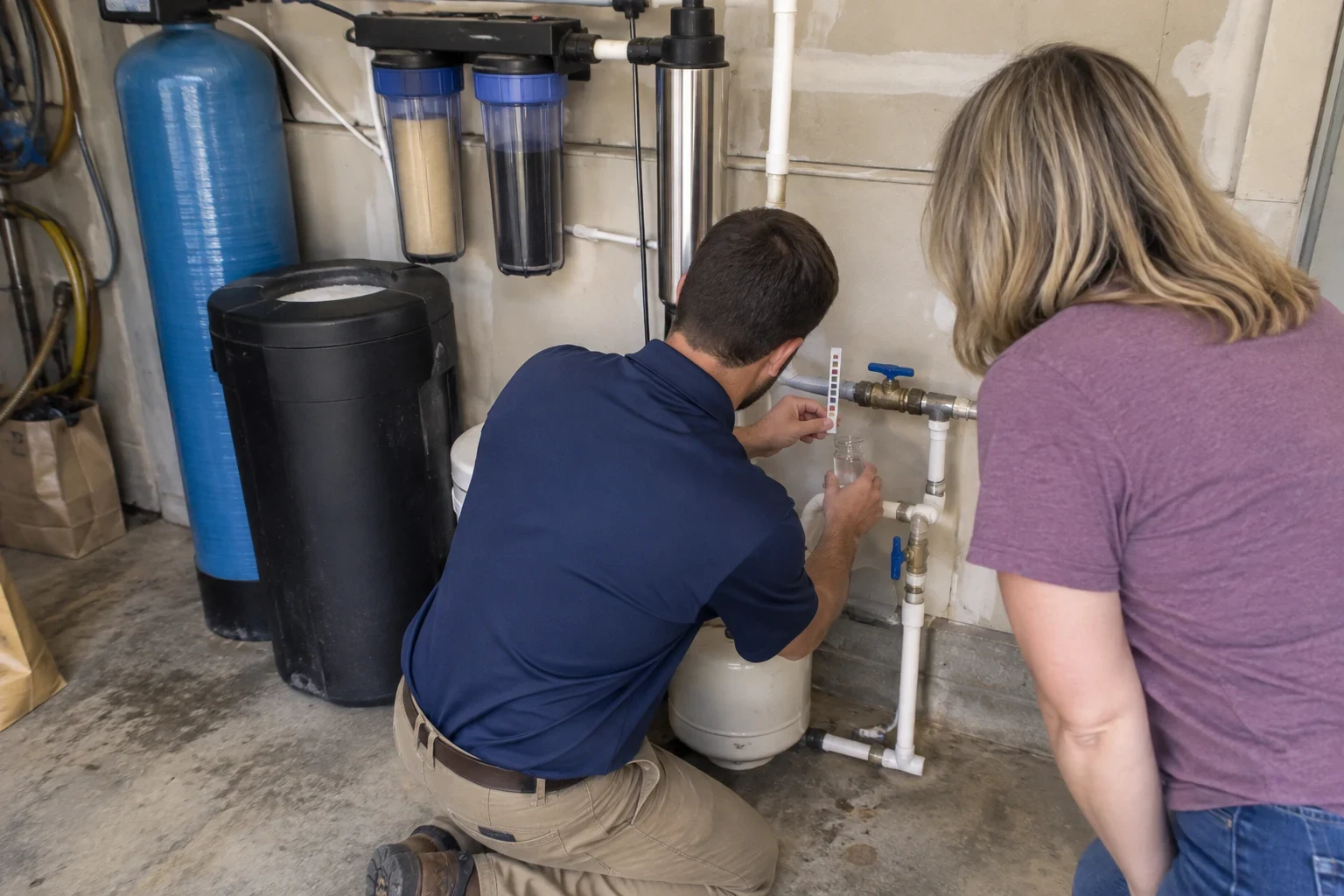
- A water test and plain review
- We check for iron, manganese, sulfur, hardness, pH and bacteria, then sit down with you and go over the numbers. You see what we see before any equipment is discussed.
- Sediment prefiltration
- A sediment filter catches sand and grit before it reaches your fixtures or the rest of the system. It also protects any UV unit downstream, since cloudy water lets bacteria hide from the light.
- Iron, manganese and sulfur removal
- An oxidizing filter converts dissolved iron and sulfur into particles it can trap, then backwashes them to a drain on a set schedule. This is what clears up orange stains and that rotten egg smell from the hot water.
- UV disinfection
- An ultraviolet unit treats every gallon as it passes through, without adding chemicals to your water. We recommend it when a test shows bacteria or when you want a safeguard on an older well.
- Softening and drinking water add-ons
- If hardness turns up in the test, a water softener can follow the iron filter. For cleaner water at the kitchen tap, a reverse osmosis system under the sink finishes the job.
- Full services after the sale
- Filters need media, lamps need changing and settings sometimes need adjusting as your well changes. We stay on call for all of it, so you are never left figuring out a control valve alone.
Signs Your Well Water Needs Treatment
Orange or rust-colored stains
Red-brown rings in toilets, tubs and laundry usually point to dissolved iron. It is rarely a health issue, but it ruins fixtures and white clothes over time.
A rotten egg smell
That odor is usually hydrogen sulfide gas, and it is often strongest when you run hot water. A test tells us whether it is in the well itself or coming from the water heater.
Black specks or dark stains
Manganese leaves gray to black residue and can give water a bitter taste. It often travels with iron and is treated alongside it.
Gritty or cloudy water
Sand in aerators, cloudy glasses and clogged showerheads mean sediment is getting past the well screen.
After flooding or a positive bacteria test
Heavy Gulf Coast storms can push surface water toward a wellhead. If water stood near your well or a test came back positive for coliform, it is time to test again and look at disinfection.
What Shapes the Cost of Well Water Treatment
There is no single price for treating a well, because no two wells carry the same mix of minerals and bacteria. Your test results decide most of it. We give you your quote by phone or after the test, broken out so you can see what each piece does.
What the test finds
Sediment alone is a small job. Iron, sulfur and bacteria together call for several stages, each with its own equipment.
Flow rate and household size
A system has to keep up when the shower, washer and dishwasher run at once. Larger households and higher flow need larger tanks and valves.
Space, drain and power
Backwashing filters need a nearby drain and UV units need an outlet. If the area around your pressure tank is tight or lacks either one, extra plumbing or wiring adds to the work.
Ongoing upkeep
Some systems use replaceable cartridges, UV lamps or media that wear over time. We explain the routine costs up front so there are no surprises later.
How a Well Water Job Goes
- 1
Testing and a walk-through
We take a sample, look at your well setup and pressure tank, and ask what you have noticed. Smells, stains and taste all help us read the results.
- 2
A written recommendation
You get a clear list of what we suggest and why, tied to your test numbers. If a simple fix will do, that is what we will say.
- 3
Installation day
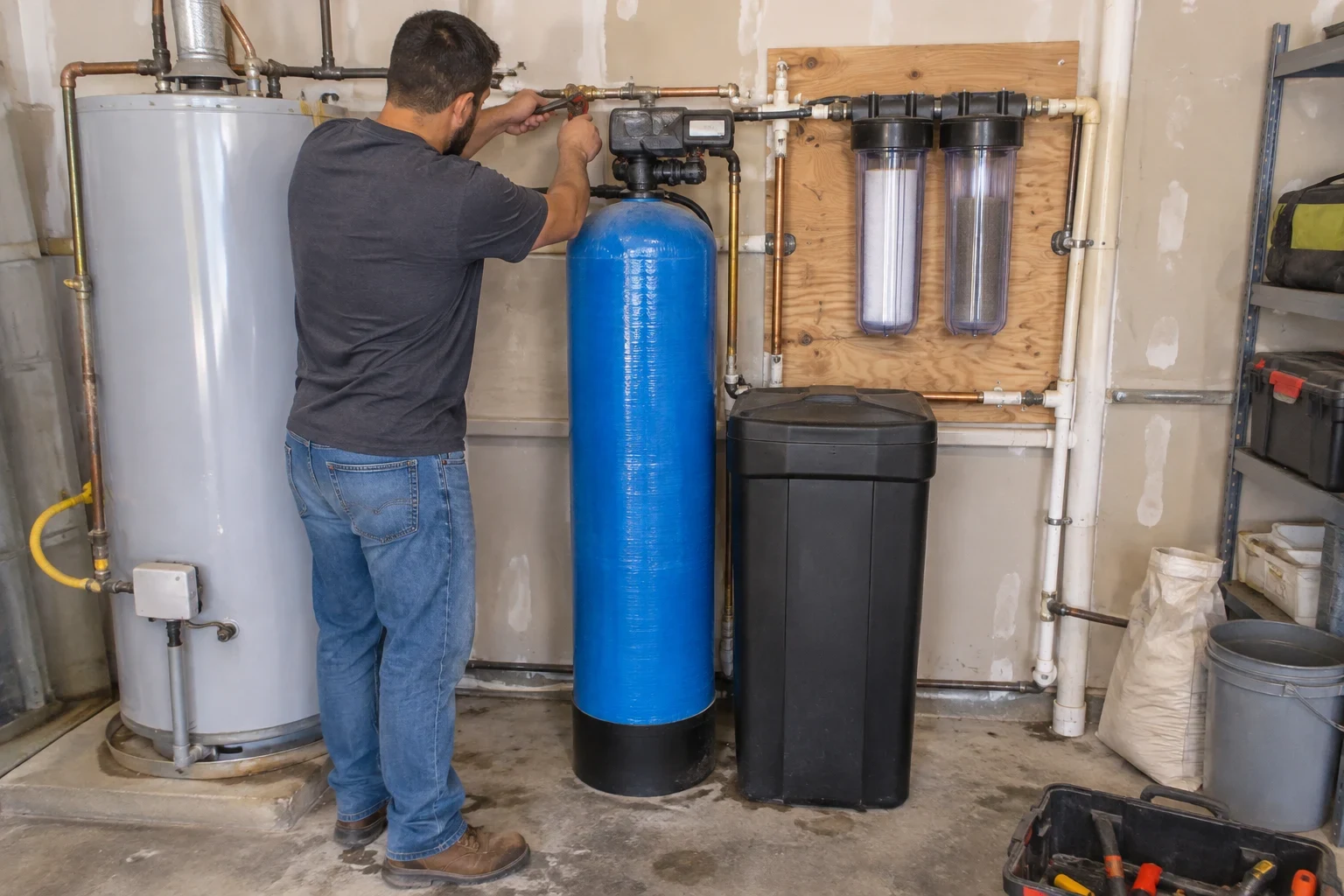
We shut the water off at the pressure tank, install the equipment in the right order with a bypass valve, and connect drain lines and power where needed. We protect the floor, keep the work area tidy and clean up before we leave. Installation is free.
- 4
Start-up and a quick lesson
We flush the system, set the backwash schedule and run water at your taps to check the result. Then we show you the bypass, the settings and what routine care looks like.
- 5
Follow-up as your well changes
Wells shift with seasons and rainfall. We retest when it makes sense and adjust or service the system so it keeps doing its job.
Well Water Treatment Questions
Do I really need a test before you recommend anything?
Yes. Iron, sulfur, bacteria and hardness each need different equipment, and guessing leads to systems that cost more and fix less. A test also gives you a baseline to compare against later. Our Water Testing page covers what we check.
Will treatment equipment make my showers weaker?
It shouldn't, as long as the equipment fits your well. We match valve and tank sizes to the flow your pump delivers and to how much water your home uses at peak times. When we do find weak pressure on a treated well, the cause is usually gear that was too small from the start or filters left far too long between changes.
Does the equipment need electricity?
Most does. Backwashing filters use a small control valve and UV units need a steady outlet near the pressure tank. We check for power during the walk-through and tell you if anything needs to be added.
Can UV handle bacteria after a flood?
UV is a good ongoing safeguard, but it works best on clear water and is not a substitute for disinfecting a well that has taken in floodwater. The well usually needs to be shocked and flushed first, then retested. Once the water tests clean, UV helps keep it that way.
How much upkeep will my system need?
It depends on what is installed. Sediment cartridges may need changing every few months, UV lamps are typically replaced about once a year, and backwashing filters mostly look after themselves. We set you up with a simple schedule and handle the service when it comes due.
Find Out What Is in Your Well
Describe the stains, smells or grit you have been dealing with, and we will walk you through how testing works and which fixes usually solve it. You get straight answers about your water and no push to buy anything.