ServicesWater Testing
Water Testing in Seabrook
Before anyone sells you a filter, you deserve to know what is in your water. We test at your kitchen tap, walk you through each number at the table and give you a straight answer on whether your home needs treatment at all.
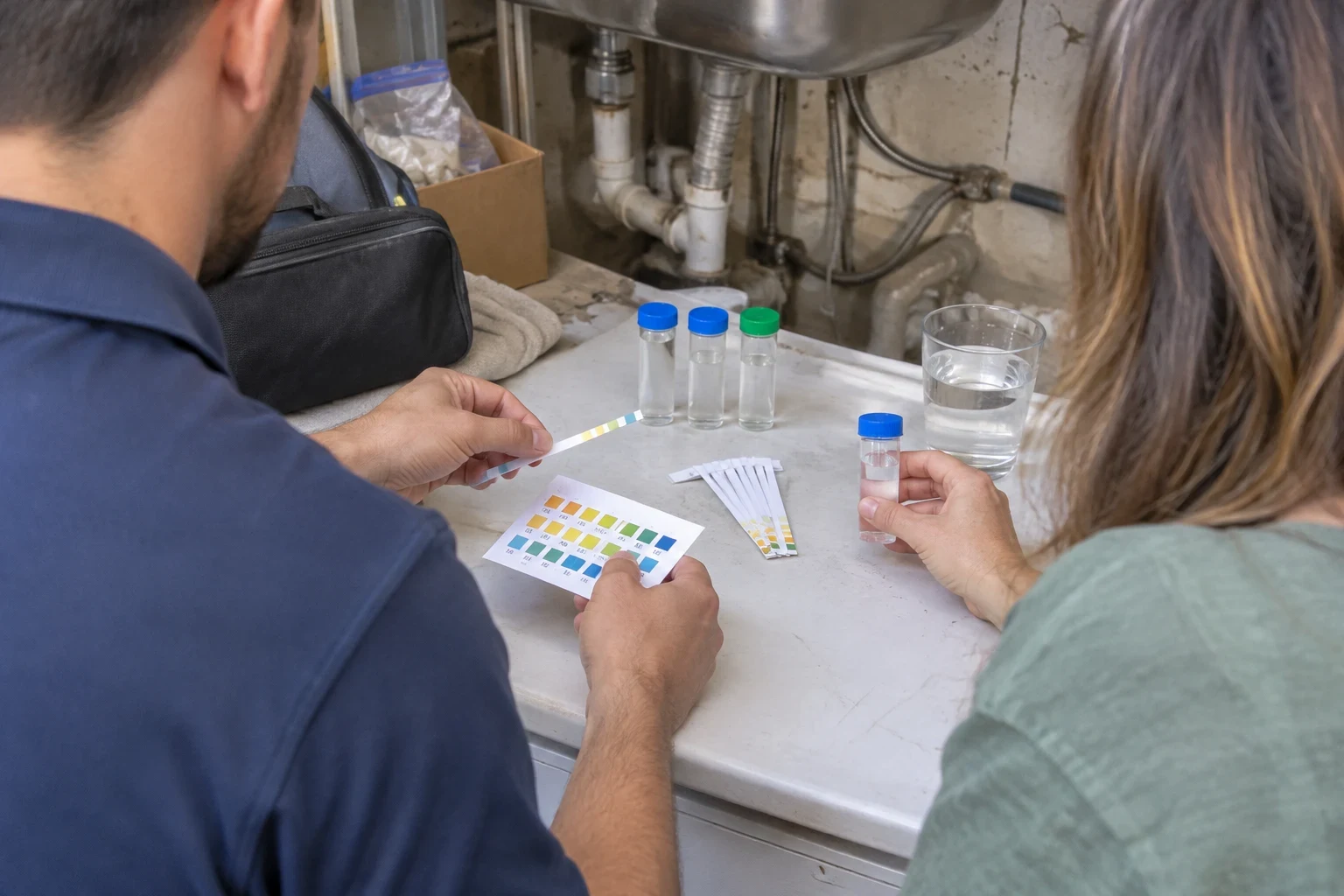
Know your water before you choose a system
A water test is the starting point for every good treatment decision. It tells us what your water carries, how much of it and where it is coming from: the supply itself, the pipes inside your home or an older water heater. Without that, any recommendation is a guess.
We test homes on city water and homes on private wells. City water is treated and monitored before it reaches you, so for many families the questions are about taste, chlorine smell, spotting on glasses or what older plumbing might add on the way to the faucet. Well owners carry more of the responsibility themselves, since nobody else is checking that water for them.
Sometimes the honest result is that your water is fine, or that a simple filter at one sink covers it. We would rather tell you that than put the wrong equipment in your home.
What a water test covers
- Hardness
- We measure calcium and magnesium so you can see how much scale your fixtures and water heater are really up against. That reading is what tells us if a water softener is worth considering at all.
- Iron and manganese
- These leave orange or dark stains in sinks, tubs and laundry. Even low levels show up on white porcelain given enough time.
- Chlorine and taste issues
- We check disinfectant levels at the tap, which often explains a pool-like smell or a flat taste in your morning coffee.
- pH and dissolved solids
- pH shows if your water leans corrosive toward copper pipes. Total dissolved solids give a quick picture of how much is in the water overall.
- Well water checks
- For private wells we look at bacteria, nitrates and the other items that matter most when you are the only one watching your supply. When a question needs a lab, we collect the sample and send it out.
- Results you can keep
- You get every number in writing, with a plain note next to each one explaining what it means and if it needs attention.
Signs it is time to test your water
A smell you notice right away
A bleach-like smell usually points to chlorine. A rotten-egg smell, especially from hot water, often points to sulfur or the water heater.
Stains that keep coming back
Rust-colored rings in the toilet or tub, or gray dinge in white towels, suggest iron or other minerals worth measuring.
White crust on fixtures
Buildup on showerheads, faucet aerators and the coffee maker is a sign of hardness. A test tells you how much.
You rely on a private well
Wells can change with heavy rain, flooding or nearby work. A yearly test is a sensible habit, and more often after a storm puts water over the wellhead.
Older pipes or a new baby
If your home has older plumbing, or someone in the house is pregnant or very young, it is reasonable to want certainty about what reaches the glass.
How a testing visit goes
- 1
Start with a call
Let us know what has caught your attention, like a smell, stains or a taste, and if your home runs on city water or a private well. With that, we pack the right test kits and find a time that works for you.
- 2
Sampling at your tap
We run the cold water briefly, take samples from the kitchen and any other spot that worries you, and test most items on the spot. It usually takes well under an hour, and we leave the sink as clean as we found it.
- 3
Going over the numbers together
We sit down with you and explain each result in everyday terms. Ask anything you like, and take all the time you need.
- 4
An honest recommendation
If treatment would help, we explain which kind and why, from whole-home filtration to reverse osmosis at one sink. If your water does not need anything, we tell you that.
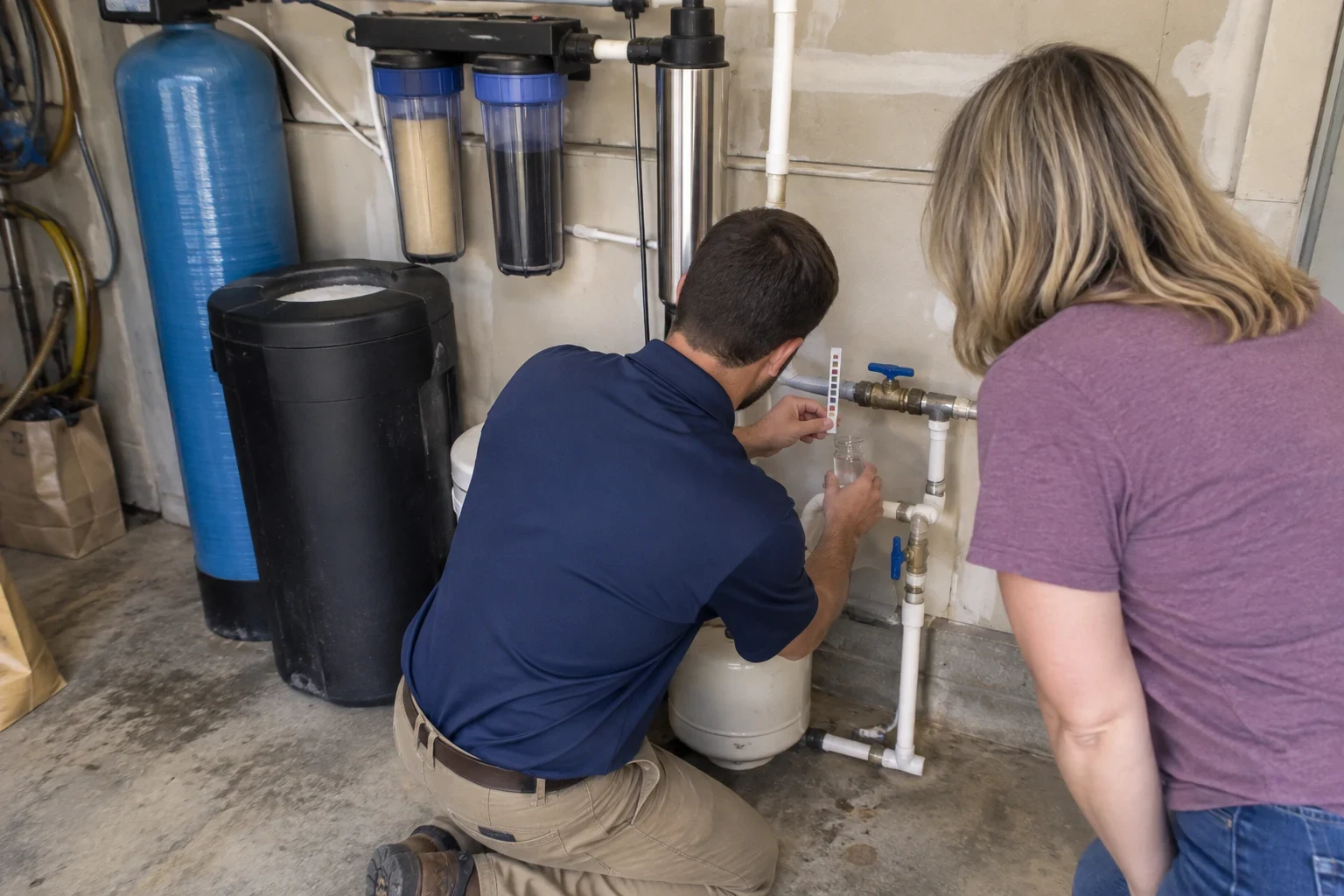
What affects the cost of testing
The price of a test comes down to what we need to check and where each sample has to go. Before we put a visit on the calendar, we explain on the phone what it will include, so the day holds no surprises.
- City water or a well
- Well water usually needs a wider set of checks, including bacteria, so there is more to do.
- On-site or lab testing
- Plenty of items can be read right at your tap. Others, like bacteria or certain metals, have to go to an outside lab, and that lab work is billed separately.
- How many taps we sample
- A single sample from the kitchen is quick. Tracking a problem to its source can mean comparing the kitchen, a bathroom and the water heater drain, which takes more time and more tests.
- Follow-up testing
- After a well is disinfected or new equipment goes in, a second round confirms things changed the way they should. If we think one is worthwhile, we mention it at the start.
Water testing questions
Something not covered here? (281) 552-8460
I am on city water. Do I really need a test?
Not always. City water is treated and checked before it leaves the plant, but it can still pick things up from the pipes inside your home, and taste or hardness are not problems the city solves for you. A test answers your own question so you are not left guessing.
Are you going to push a system on me once the results are in?
No. We go over what the readings say and what, if anything, would make a difference. When your water is in good shape, you will hear that from us in plain words. The decision stays with you, and nobody leans on you at the kitchen table.
How often should a private well be tested?
Once a year is a sound starting point. Test again after flooding, after any repair to the well or pump, or when the taste, smell or color shifts. Those are the times a well is most likely to have picked something up.
Do I have to be home during the test?
Yes, please plan to be there. We need to get to your taps, and the most useful part of the visit is talking through the results with you face to face.
How soon will I have results?
Most on-site readings are done before we pack up. Anything sent to an outside lab takes longer, and we call you to walk through those numbers when they arrive.
What happens if you find something that needs treatment?
We lay out your options and the trade-offs of each. If you choose to go ahead, we offer free installation and full services after the sale, so you have someone to call once the system is running.
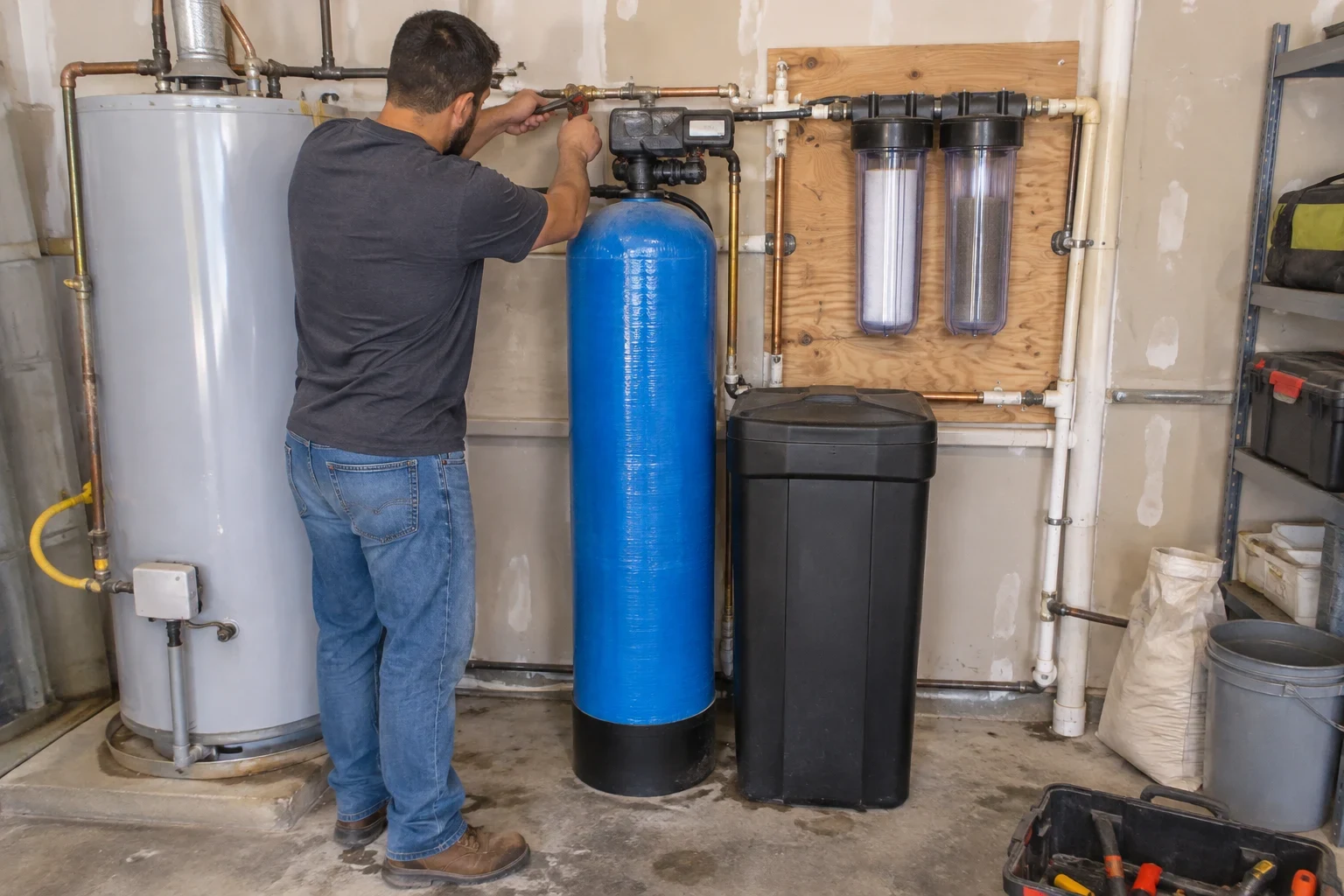
Find out what is really in your tap
Tell us what you have been noticing in your water and we will set up a visit that fits your schedule. You will come away with real numbers and a clear next step.