ServicesWater Softeners
Water Softeners in Seabrook
Scale on your faucets, spotty dishes and soap that won't lather usually point to hard water. We test your water first, then size a softener to your home and your family's water use. If a softener isn't the right fix, we'll tell you.
How softening works, and who it helps
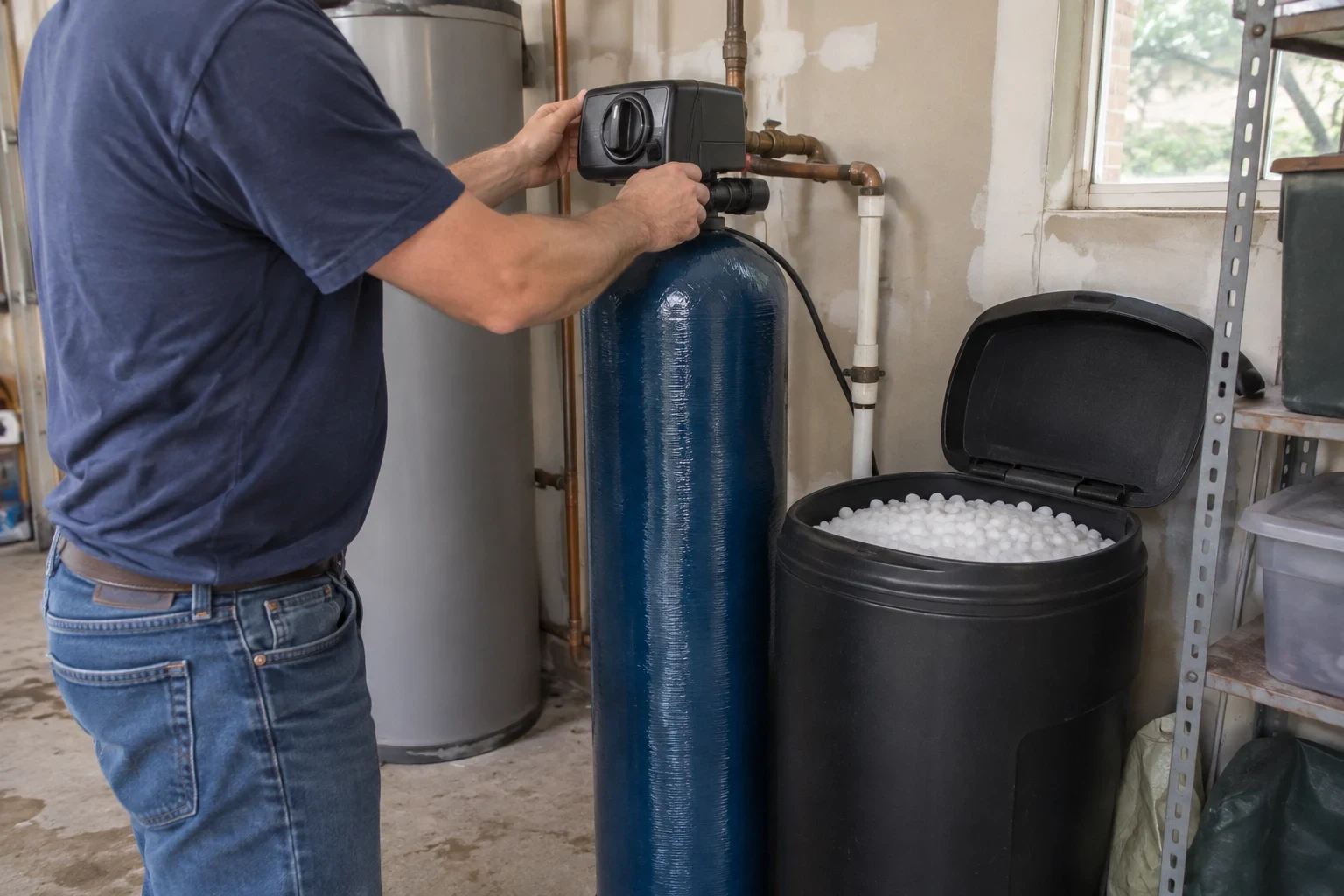
Hard water carries dissolved calcium and magnesium. Left alone, those minerals crust over faucets, slowly narrow pipes and collect at the bottom of your water heater. A softener catches them first. Water passes through a tank filled with resin beads that grab the hardness minerals and give up sodium or potassium in exchange. On a set schedule, the system rinses those beads with brine from a salt tank so they can keep working.
We won't suggest a softener until we've tested your water's hardness. In some homes the water is hard enough that softening protects appliances and cuts down on scrubbing. In others it isn't, and the real annoyance turns out to be a chlorine taste or smell that softening does nothing for. For those homes, whole-home filtration or reverse osmosis fits better, and we'll tell you that up front.
We treat your house the way we'd want ours treated: straight answers, a clean install and no push toward equipment you don't need.
What you get with a softener from us
- 01
A hardness test before anything else
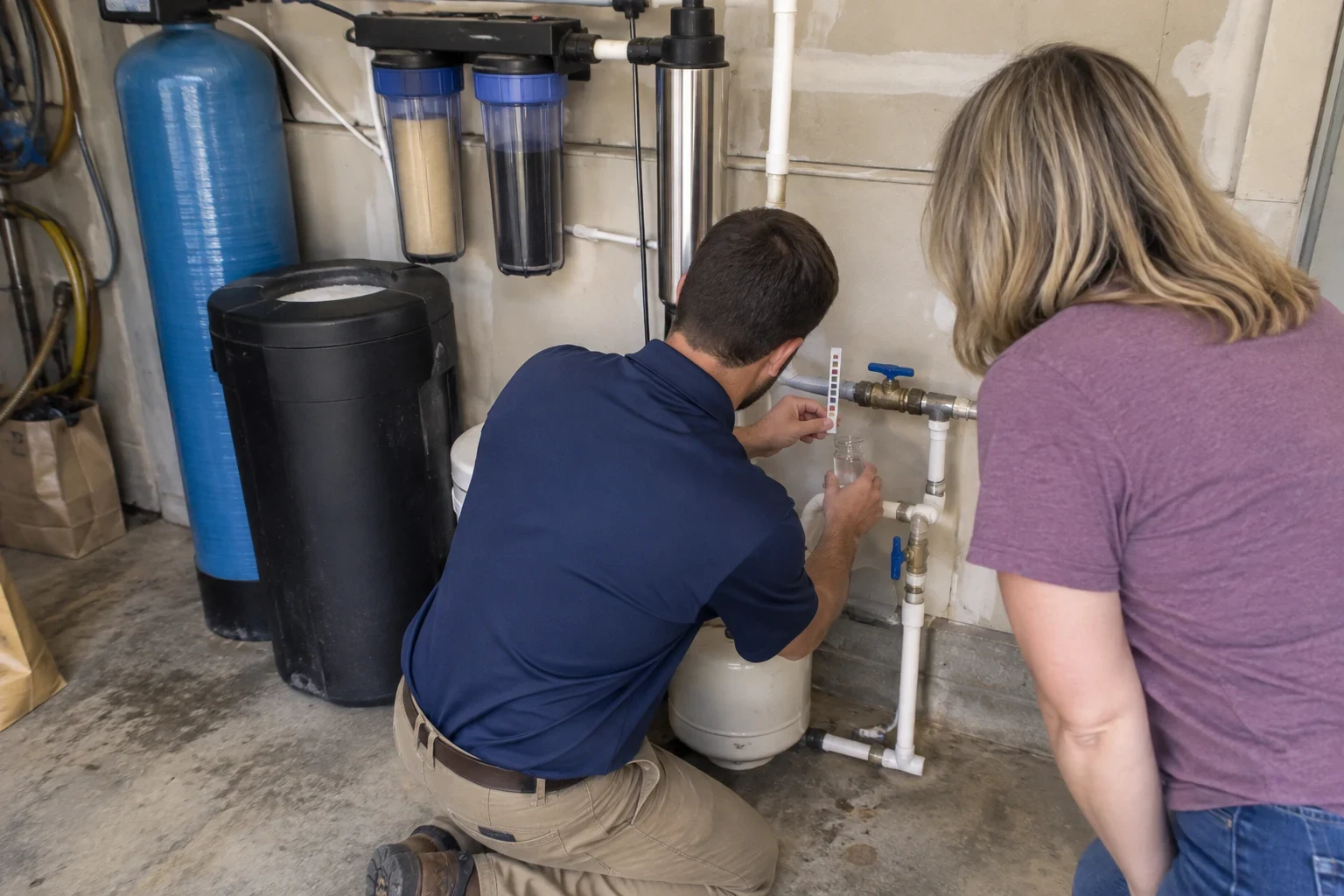
We measure your water's hardness and check for iron, since both decide which size and type of softener will do the job. You'll see the actual numbers behind our recommendation.
- 02
A unit matched to your household
We pick the size from your hardness reading and your family's daily water use. Too small, and the system regenerates far too often and goes through bags of salt fast. Too big, and you pay for capacity you'll never use.
- 03
Free installation
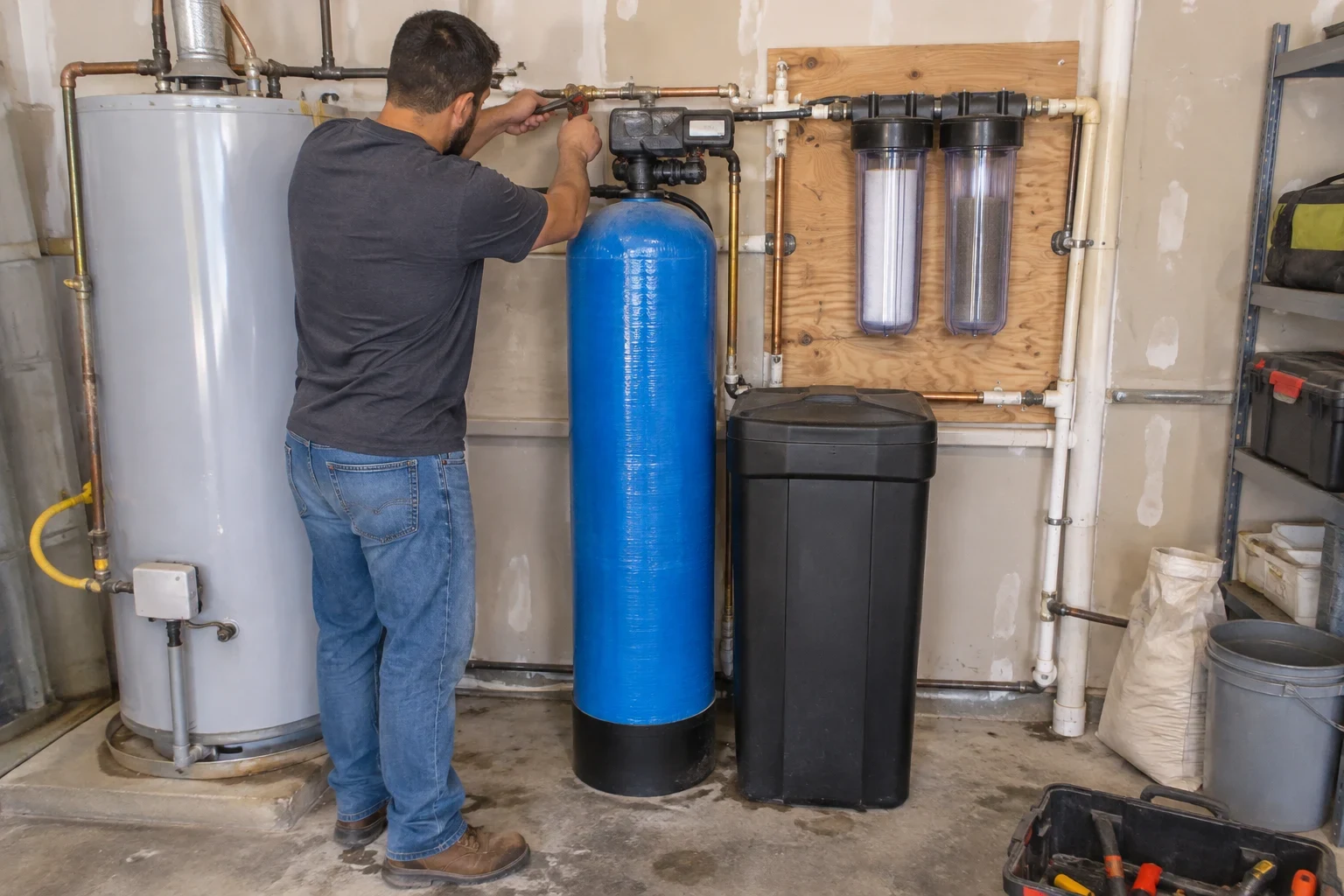
Installation is free. We connect the softener to your main line, fit a bypass valve so you can take it offline and still have water, and route the drain line for regeneration.
- 04
Setup and a walkthrough
We program the control valve for your water and household, add the first bags of salt and show you where the salt level should sit. After a few minutes together, you'll know what normal looks like.
- 05
Full services after the sale
Once your softener is running, we don't disappear. If the water starts to feel hard again or the valve misbehaves, you reach the same people who installed it.
Questions about Water Softeners?
Call(281) 552-8460Signs hard water is getting to your home
White crust on faucets and showerheads
Chalky buildup around fixtures and clogged showerhead nozzles are the most common clue. It comes back quickly after you scrub it off.
Spots on glasses and dishes
Cloudy film on glassware straight out of the dishwasher often means minerals are drying on the surface.
Soap that won't lather
Minerals in hard water tie up soap, so it takes extra shampoo or body wash to get suds, and your skin or hair can still feel coated after rinsing.
A noisy or slow water heater
Popping or rumbling from the tank can be mineral scale settling at the bottom, which makes the heater work harder.
Stiff, dull laundry
Towels that feel scratchy and colors that fade early can both trace back to minerals in the wash water.
How a softener install goes
- 1
A phone conversation
You tell us what you're noticing around your home. We ask a few questions about your household and plumbing so we come prepared.
- 2
Testing your water
We measure hardness and check for iron at your tap. If the results don't support a softener, we explain what would help instead.
- 3
A clear recommendation
We go over the size and type of system we'd suggest and what it costs, line by line, before any work starts.
- 4
Installation day
We lay down floor protection, connect the softener near your main water line and check every joint once pressure is back on. The water only needs to be shut off for a stretch of the visit, not the whole time, and we sweep up before heading out.
- 5
Checking in afterward
After the first regeneration cycles, we can recheck your water to confirm the hardness is where it should be.
What affects the price of a softener
Since installation is free, the price mostly comes down to the equipment that fits your water and your home. We give you the full number by phone or after testing, with nothing tacked on later.
- Capacity
- Harder water and bigger households need a larger resin tank. Capacity is the biggest driver of the equipment cost.
- Control valve type
- A metered valve regenerates based on how much water you've actually used, which saves salt and water. A simpler timed valve costs less up front.
- Iron or other issues
- If testing turns up iron, the softener may need a different resin or a filter ahead of it. We'll show you why before adding anything.
- Salt or potassium
- Ongoing cost depends on your choice of regeneration salt. Potassium costs more per bag but adds no sodium to your water.
Questions about water softeners
How do I know if I really need a softener?
Testing settles it, not guesswork. If your water measures soft or only a little hard, a softener may never pay for itself. We'll give you a plain answer either way and suggest something better suited if that's the case.
Will softened water taste salty?
Most families never notice a difference. The softener trades a small amount of sodium for the hardness minerals it removes. If you'd prefer no added sodium, potassium chloride can be used instead, or a reverse osmosis unit at the kitchen sink can handle your drinking and cooking water.
Will a softener fix chlorine taste or odor?
It won't. Softeners are built to remove hardness minerals and nothing more. If chlorine is what bothers you, whole-home filtration is what takes it out, and both units can share the same incoming line if you want each job covered.
What upkeep does a softener need?
For the most part, just keeping the brine tank stocked with salt. Check under the lid once a month or so and pour in a bag when it looks low. Anything more than that is covered by our full services after the sale, so you call us and we take care of it.
Where in my home does the softener go?
Near the point where your main water line enters, which is often a garage, a utility room or an outdoor spot next to the line. It needs a nearby drain for regeneration and, with most models, an electrical outlet. We'll look over your setup and recommend the spot that makes the most sense.
Find out whether a softener is right for your home
Tell us what you're seeing at your faucets and in your laundry. We'll explain what testing would show and give you an honest recommendation, softener or not.