ServicesReverse Osmosis
Reverse Osmosis in Seabrook, TX
A reverse osmosis system puts clean, good-tasting water at your kitchen sink for drinking, coffee and cooking. We check your water first, explain what an RO system will and won't change, and fit it neatly under your sink so your kitchen is back to normal before we leave.
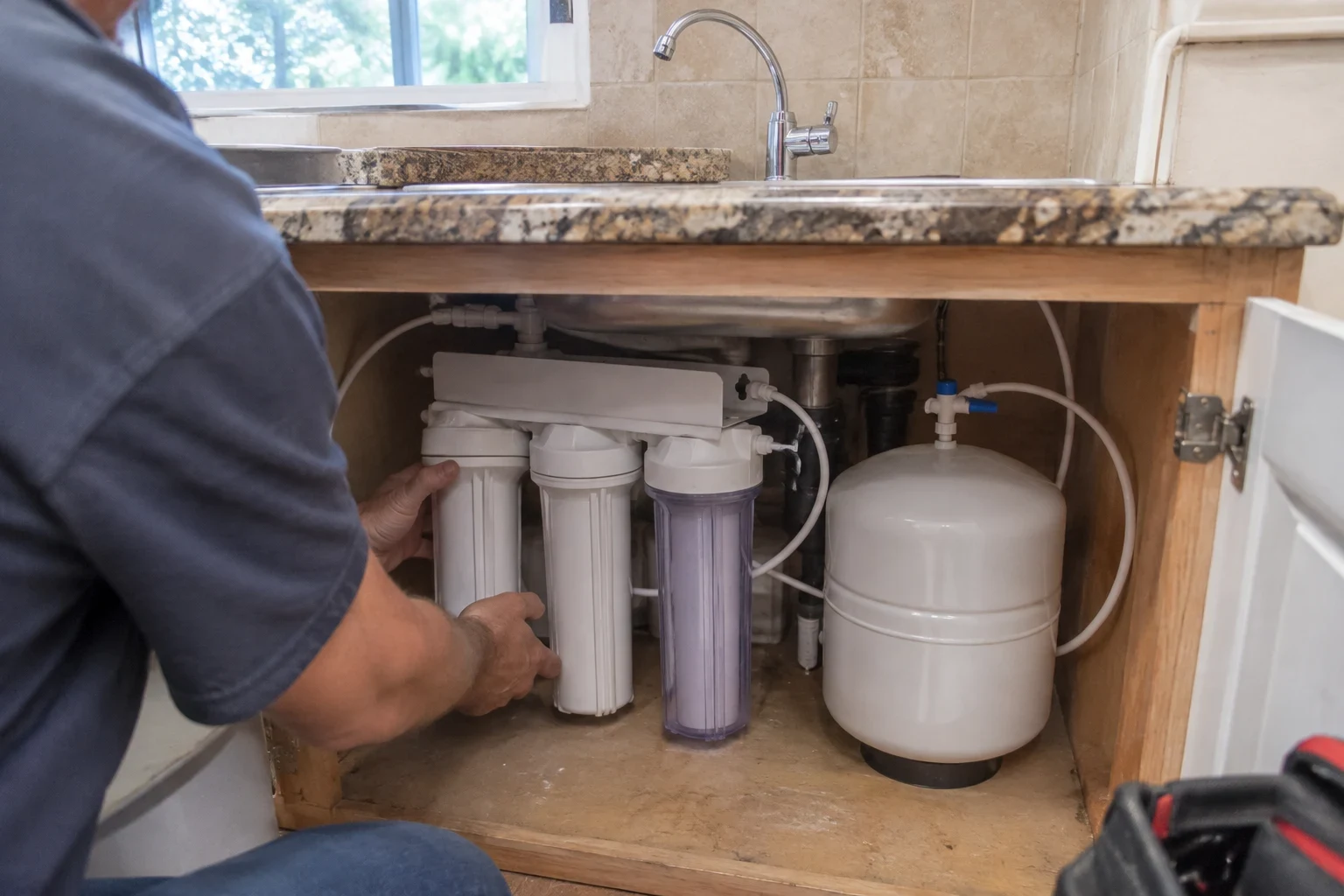
What reverse osmosis does at your tap
Reverse osmosis pushes water through a very fine membrane. Clean water makes it across, while most dissolved minerals, many metals and a long list of trace contaminants are held back and flushed away. Before and after the membrane, activated carbon filters catch chlorine, so the bleach-like taste and smell are gone from the glass. The treated water waits in a small storage tank under the sink and comes out of its own faucet.
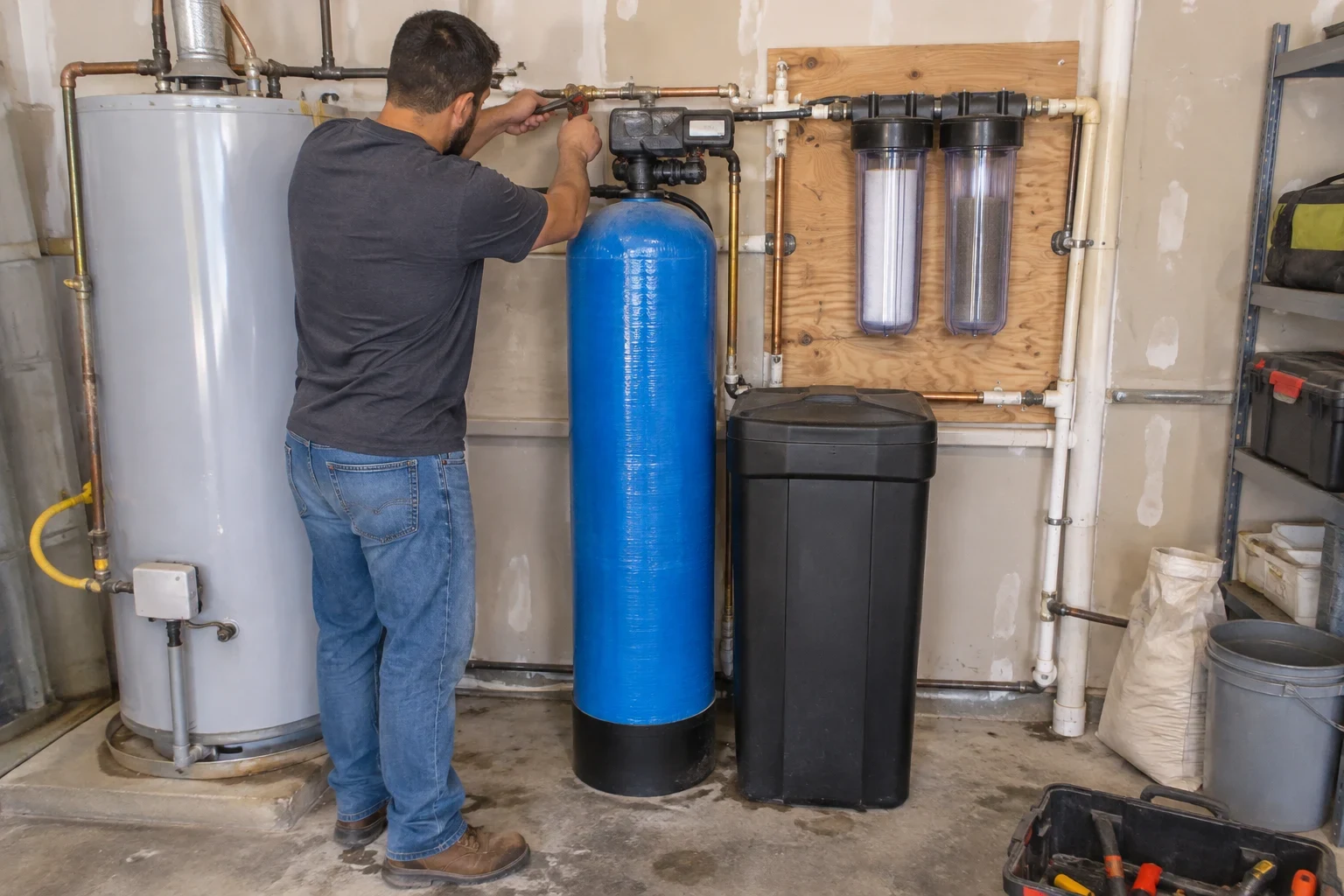
It is the right call when your main concern is the water you drink and cook with: the taste of tap water, lead that can come from older plumbing, or simply wanting more assurance than the city supply alone gives you. If the issue is the whole house, like chlorine in the shower or scale on fixtures, whole-home filtration or a water softener may fit better. Some homes pair one of those with an RO at the kitchen.
We give the same advice we'd give the family next door. If a simpler filter would solve your problem, we'll tell you that.
What comes with your RO installation
- A water check before any recommendation
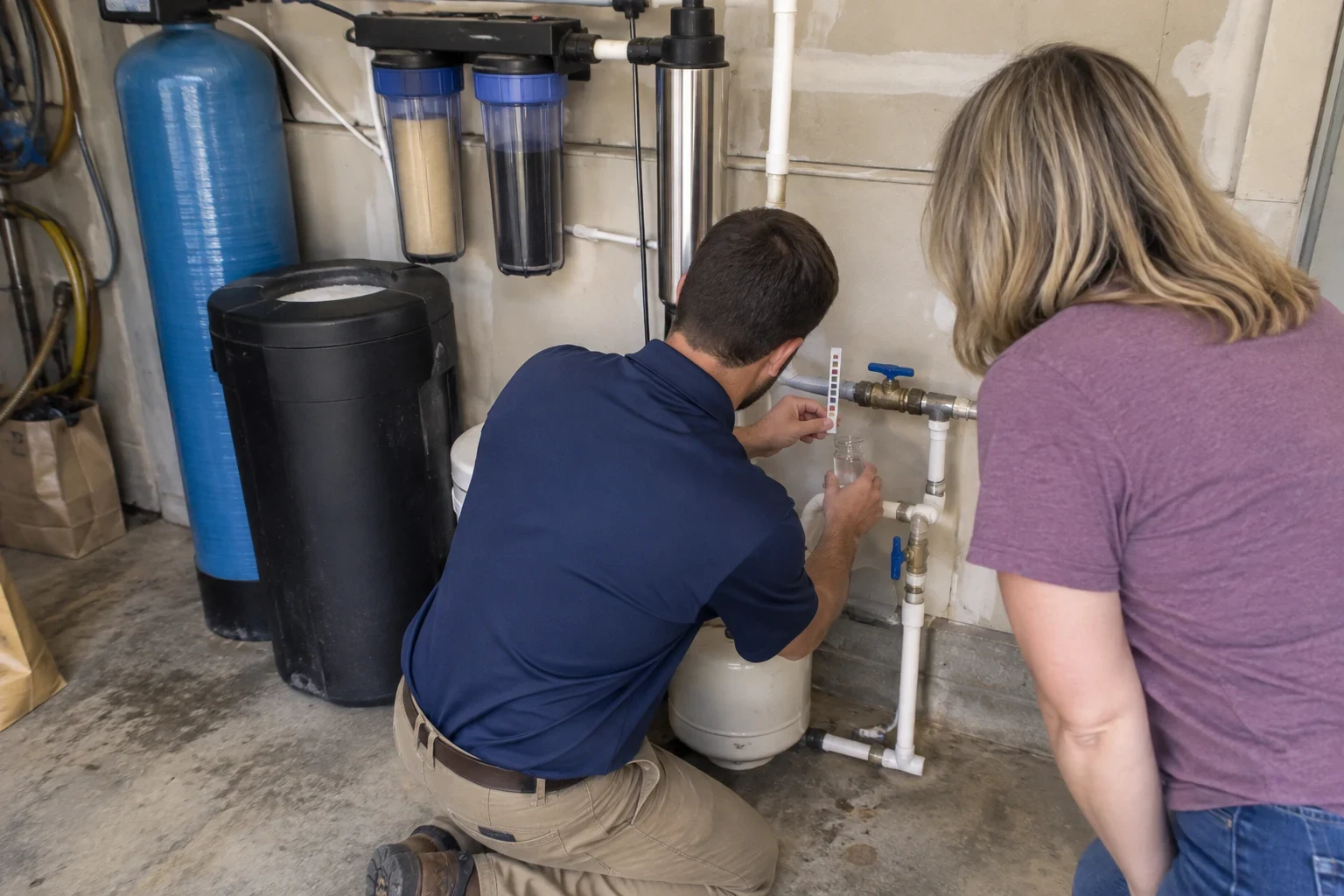
- We measure hardness, total dissolved solids and chlorine at your tap so the system matches your water. You get the numbers explained in plain terms. For a deeper lab picture, our Water Testing service covers more.
- A multi-stage system sized for your household
- A sediment filter, carbon stages, the membrane and a final polishing filter. Tank size depends on how much drinking and cooking water your family actually uses.
- A dedicated faucet and clean connections
- We mount the faucet in an existing sprayer hole or drill a new one, tie into the cold line with its own shutoff and connect the drain properly to your sink plumbing.
- Ice maker or refrigerator line
- If you want filtered water in your fridge dispenser and ice, we run a separate line to it during the same visit.
- Leak check and first flush
- We fill and flush the system, check every fitting and show you where the shutoff is.
- Full services after the sale
- Filter changes, membrane checks and questions down the road all come back to us. You won't be left guessing which cartridge to buy.
Signs an RO system makes sense for you
Your tap water smells like a pool
Chlorine keeps city water safe, but many people dislike the taste. The carbon stages in an RO take it out of your drinking water.
You haul home cases of bottled water
If the pantry is stacked with plastic bottles, an RO gives you the same kind of water from a faucet, without the trips and the recycling bin.
Your home has older plumbing
Homes built before 1986 may have lead solder, and some older houses still have galvanized pipe. An RO is a strong last line of defense at the tap you drink from.
Coffee, tea and ice taste off
Cloudy ice cubes or coffee with a flat, bitter edge often point to dissolved minerals and chlorine in the water.
Your current RO has slowed down
A trickle at the faucet or water that tastes stale usually means overdue filters or a worn membrane. We can service it or tell you honestly if replacing makes more sense.
How an RO install goes
- 1
A conversation by phone
We ask what bothers you about your water, how many people are at home and what's under your kitchen sink. That tells us what to bring.
- 2
Testing and a look under the sink
At your home we test the water and check cabinet space, the drain, the cold line and your water pressure. Low pressure may call for a small pump so the system works well.
- 3
Careful installation
We lay down a towel, clear the cabinet only as much as needed, mount the filters and tank, and connect the faucet. Most kitchens are done in a single visit, and we clean up after ourselves.
- 4
Walkthrough and follow-up
We pour you the first glass, show you the shutoff and explain the filter schedule. When it's time for new filters, you call us.
What affects the cost of an RO system
The price depends on the system you choose and your kitchen, not on a sales pitch. We offer free installation, and we explain the options and ongoing upkeep before you decide. Here is what moves the number.
- Number of stages and add-ons
- A basic system costs less than one with a remineralization stage or extra polishing filters.
- Tank, pump and pressure
- Homes with low water pressure may need a booster or permeate pump. Tankless models take less cabinet space but are priced differently.
- Your countertop and cabinet
- Drilling stone or quartz for a new faucet takes more time and care than using an existing hole. A tight cabinet with a disposal can also add work.
- Extra lines
- Sending filtered water to your fridge dispenser or ice maker means more tubing and more time on the job. The longer the run from the sink to the fridge, the more that piece adds.
- Filter and membrane upkeep
- Replacement intervals depend on your water and usage. Harder water wears a membrane faster, which is why we test before recommending anything.
Reverse osmosis questions we hear
Something not covered here? (281) 552-8460
Does a reverse osmosis system waste water?
Some, yes. To keep the membrane clean, the system flushes a share of the incoming water to your sink drain while it makes drinking water. How much depends on the model and on the water pressure in your home. Efficient newer designs and permeate pumps cut that flush water down considerably, and we'll tell you which choices make sense for your setup.
Does RO take the minerals out of my water?
It removes most of them, along with the things you want gone. Some people like the clean taste, others find it flat. A remineralization stage adds a little calcium and magnesium back, and our Alkaline Water Systems page covers that option in more detail.
How often do the filters need changing?
Pre-filters are commonly changed every six to twelve months and membranes every few years, but your water and how much you use set the real schedule. We write it down for you, and because we offer full services after the sale, you can simply call us when it's due.
Will it lower the pressure at my kitchen faucet?
Your regular faucet works exactly as before. The RO has its own smaller faucet, and its flow is gentler than the main tap. Filling a pot or a pitcher takes a little longer, which most families get used to within days.
Do I need a water softener with my RO?
Not necessarily. Many homes run an RO alone without trouble. If your test shows hard water, a softener can protect the membrane and your fixtures, and we'll explain that only when the numbers support it.
Let's talk about your drinking water
Tell us what bothers you about your tap water and what's under your sink. We'll explain which system fits and what to expect on install day.